




No products in the cart.
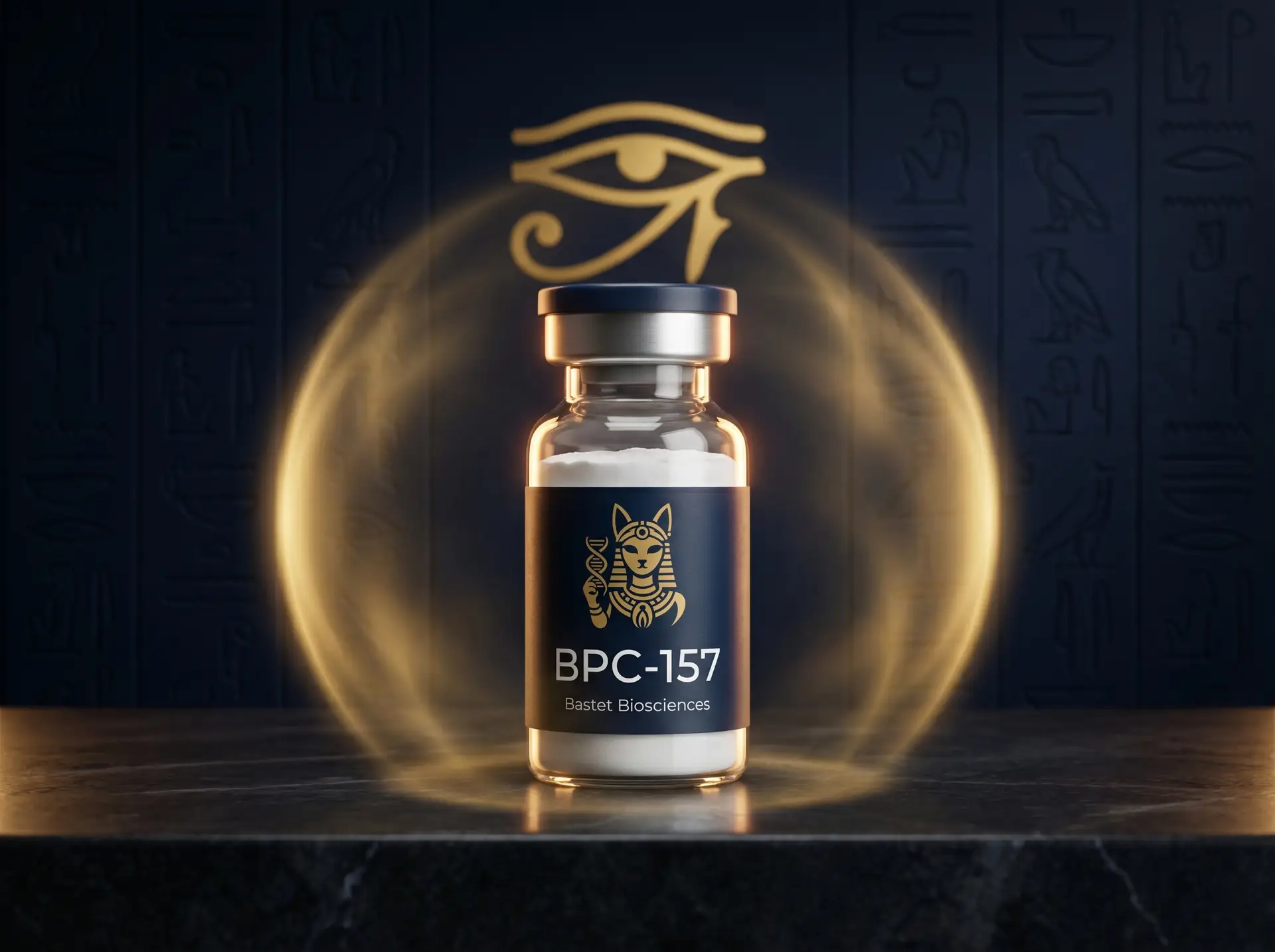
BPC-157, short for Body Protective Compound 157, is a synthetic pentadecapeptide composed of fifteen amino acids. It was originally isolated from human gastric juice and has been studied for more than three decades in the context of tissue protection and regeneration [1].
Its stability sets it apart from most peptides: BPC-157 remains bioactive in the acidic environment of the stomach, a characteristic that has made it the subject of extensive preclinical research into gastrointestinal and systemic healing.
Mechanism of Action
BPC-157 engages multiple overlapping biological pathways. Most notably, it activates the vascular endothelial growth factor receptor 2 (VEGFR2) and the Akt-eNOS axis, which promote angiogenesis, fibroblast proliferation, and neuromuscular stabilization [2].
It also engages the ERK1/2 signaling pathway, facilitates endothelial and muscle repair, and exerts significant anti-inflammatory effects by reducing pro-inflammatory cytokines including tumor necrosis factor-alpha (TNF-α), interleukin-6 (IL-6), and interferon-gamma (IFN-γ) [3].
BPC-157 activates several overlapping pathways, notably VEGFR2 and nitric oxide synthesis via the Akt-eNOS axis, promoting angiogenesis, fibroblast activity, and neuromuscular stabilization.
— Regeneration or Risk? A Narrative Review of BPC-157, PMC12446177 (2024)
Documented Research Applications
Preclinical studies have examined BPC-157 across a broad range of injury models, including:
A notable observation in animal studies is that the therapeutic effects initiated by BPC-157 appear to persist for weeks to months, far exceeding its pharmacokinetic half-life of less than 30 minutes [2]. In spinal cord injury studies, functional improvements were maintained for up to 360 days after a single treatment series.
Current Research Status
Despite the breadth of preclinical evidence, human clinical data on BPC-157 remain limited to three pilot studies examining intraarticular knee pain, interstitial cystitis, and intravenous safety and pharmacokinetics [4]. BPC-157 has not received U.S. Food and Drug Administration approval and is currently banned in professional sports.
Leading researchers consistently emphasize the need for rigorous controlled human trials before any clinical translation can be considered.
References
[1] Sikiric P., et al. Stable Gastric Pentadecapeptide BPC 157 and Wound Healing. Front Pharmacol. 2021;12:627533. PMC8275860.
[2] Seiwerth S., et al. BPC 157 and Standard Angiogenic Growth Factors. Curr Pharm Des. 2018;24(18):1972-1989. doi:10.2174/1381612824666180712110447
[3] From Regeneration to Analgesia: The Role of BPC-157 in Tissue Repair and Pain Management. Int J Mol Sci. 2026. PMC article.
[4] Emerging Use of BPC-157 in Orthopaedic Sports Medicine: A Systematic Review. PMC12313605 (2024).
[5] Gwyer D., Wragg N.M., Wilson S.L. Gastric pentadecapeptide body protection compound BPC 157 and its role in accelerating musculoskeletal soft tissue healing. Cell Tissue Res. 2019;377:153-159.






Leave a comment